How to Prepare for Board Exams: 12-Week CBSE Timetable
A 12-week plan for CBSE Class 10 and 12 boards: NCERT first, sample papers and PYQs, a daily timetable around school and tuition, and balancing JEE or NEET.

On this page
- CBSE board exams at a glance
- First: official information and your honest starting point
- NCERT first, then the papers that count most
- The 12-week board exam timetable
- A daily timetable around school and tuition
- Subject strategy for Class 10 and each Class 12 stream
- Preparing for JEE or NEET alongside your boards
- Family pressure, stress and rest days
- Where Study Buddy Cat fits
- Board exam preparation FAQ
In short
- Start your full board plan about 12 weeks before the first paper: finish NCERT first, then spend most of your time on CBSE sample papers, previous years' papers and marking schemes.
- Since 2026, Class 10 has two board exams, a main exam in February and March and a second exam in May for eligible students, and for regular students the better performance counts.
- Test yourself instead of rereading: closed-book recall, timed papers checked against the marking scheme, and an error log you revise from.
- On school and tuition days, 2–4 focused hours of self-study is enough if it happens every day; sleep and a weekly rest day are part of the plan.
Good board exam preparation starts about 12 weeks before your first paper, with a clear plan. Get the date sheet, syllabus, sample papers and marking schemes from CBSE's official website, then rank every subject by how big it is, how weak you are in it and how early its paper falls. Spend the first four weeks finishing NCERT, the middle four on weak chapters and previous years' papers, and the last four on timed full papers and fixing mistakes. Two to four hours of focused self-study after school and tuition, every day, adds up to a lot over 12 weeks, as long as you don't cut sleep.
This guide is for CBSE Class 10 and Class 12, with a section for anyone preparing for JEE or NEET alongside. On a state board, the same plan works with your board's textbooks and model papers. Rules change from year to year, so check them on cbse.gov.in, not in a forwarded WhatsApp message.
CBSE board exams at a glance
Here is how the 2026 board exams worked, from CBSE's notices and examination bye-laws:
| Class 10 | Class 12 | |
|---|---|---|
| Exams | A main board exam (in 2026, from mid-February into March) and, since 2026, a second board exam in May | One main board exam in February and March, plus a supplementary exam later for those who need it |
| Subjects | Hindi, English, Maths, Science and Social Science for most students | English plus your stream: Science – PCM, Science – PCB, Commerce or Humanities / Arts |
| Pass mark | 33% in each subject | 33% in each subject; in subjects with practicals, 33% in theory and in practical separately |
| In school | Internal assessment, projects and practicals | Practicals, projects and internal assessment |
The second Class 10 exam is new. In 2026, it was open to eligible students from the main exam who wanted to improve, and also to students in the compartment category; for regular students, the better of the two performances went into the final result. Who can sit it, and in how many subjects, is set in each year's CBSE circulars. Treat the main exam as the one that counts: the second exam is a safety net, not a second plan. How much each subject's theory, practicals and internal assessment weigh is in that subject's curriculum for the year.
First: official information and your honest starting point
Before you plan a single block, put the key information for every subject on one page:
- The date sheet, from CBSE's website or your school, never a "leaked" one doing the rounds.
- This year's syllabus, since chapters are sometimes added or dropped.
- Sample papers, marking schemes and past papers. CBSE puts up sample question papers for Class 10 and 12 every year, and its website also has marking schemes and question papers from the actual board exams, including the 2026 main and second Class 10 exams. They show how the paper is built and what an examiner looks for.
- Practicals and projects, so you're not finishing a practical file in the last week.
- Your confidence, honestly, from 1 to 5.
A Class 12 Science – PCM student's list might look like this (yours will differ):
| Subject | Syllabus done | Weakest part | Confidence (1–5) | Priority |
|---|---|---|---|---|
| Physics | About 70% | Electrostatics, ray optics numericals | 2 | High |
| Maths | About 75% | Integration, probability | 2 | High |
| Chemistry | About 80% | Organic name reactions | 3 | High |
| English | Done | Writing section practice | 4 | Medium |
| Computer Science | Done | Output questions | 4 | Low, never zero |
One rule makes most decisions easy: big subject, weak area and early paper mean more hours. Then add up your real hours, about 2–4 focused hours on school days and 5–6 on holidays and prep leave, and split them by priority. Where these numbers come from is in our guide on how many hours to study a day.
NCERT first, then the papers that count most
In CBSE schools, most subjects are taught from NCERT textbooks, and the board paper is set on that syllabus. Read NCERT actively: close the book after every chapter and write the key points, definitions and formulas from memory, then check. Do the in-text questions, solved examples and exercises, and draw and label diagrams until they're quick. Only once NCERT is done, add one good question bank. One book finished beats five half done.
After that, the real difference comes from testing yourself, not rereading. A 2013 review by John Dunlosky and colleagues rated practice testing and spreading study over time as the most useful of ten common techniques; highlighting, rereading and summarising, as students usually do them, were rated low. In Henry Roediger and Jeffrey Karpicke's 2006 experiments, students who reread did better on a test a few minutes later, but a week later those who had practised recalling the material remembered more.
| Method | How | Best for |
|---|---|---|
| Timed full paper | A sample paper or previous board paper, real time limit, no notes, no phone | Every subject |
| Chapter-wise PYQs | After each chapter, its questions from earlier board papers | The first two phases |
| Marking-scheme check | Compare your answer with CBSE's marking scheme: which steps, keywords or diagrams were missing | Long answers, numericals |
| Blank-page recall | Write everything you remember about a topic, then fill gaps in another colour | Biology, Social Science, Chemistry theory |
| Mixed practice | Questions from different chapters together, in no fixed order | Maths and numericals |
Why mixed practice? In a 2007 study by Doug Rohrer and Kelli Taylor, students who practised maths problems in a shuffled order did worse during practice but clearly better on a test a week later. The board paper mixes chapters too.
Keep an error log: the question, the chapter, and why you got it wrong (didn't know it, misread it, or ran out of time). The "why" tells you whether to re-learn, read more carefully or practise under time pressure. Revisit each chapter at growing intervals, for example 1, 3, 7, 14 and 30 days after you study it, with a short test each time; the full method is in our guide to active recall and spaced repetition.
The 12-week board exam timetable
Count the weeks backwards from your first paper. If you have fewer than 12 weeks, shorten the first phase, not the last.
| When (before the first paper) | Main job | What it looks like |
|---|---|---|
| Weeks 12–9 | Finish the syllabus | Remaining NCERT chapters; notes from memory and PYQs after each one; mark every topic green, amber or red |
| Weeks 8–5 | Fix weak areas | Two or three subjects a day; red topics first; one full paper per major subject each week; specific doubts to teachers |
| Weeks 4–2 | Exam conditions | Timed sample papers and previous papers in every subject, checked honestly against the marking scheme |
| Last week and gaps between papers | Sharpen, don't learn new things | Error log, formula sheets and diagrams from memory; most time on the next paper; usual bedtime |
Treat school pre-boards as a dress rehearsal: sit them like the real thing, then log every mistake. Their marks aren't a verdict; they tell you where your hours should go. On full-paper days, write the paper in one sitting, in the real time limit, then take a break and check it.
Between papers: rest the evening after a paper and don't match answers with friends. On the days in between, do one timed paper for the next subject and work on its red topics. The day before, write a one-page summary from memory, redo 5–10 error-log questions and stop at a fixed time.
A daily timetable around school and tuition
Most students don't have a free day: school, then tuition or coaching, then homework. So the timetable is a few fixed blocks of about 50 minutes of focus and a 10-minute break (two 25-minute Pomodoros work too). Shift it to your own timings:
| Time | What to do |
|---|---|
| 6:00–6:45 | Wake up, water, daylight; 25 minutes: yesterday's error log or formulas from memory |
| 7:30–2:00 | School; note in one line anything you didn't follow |
| 2:00–3:30 | Lunch, rest, a 20-minute nap if it helps |
| 3:30–4:20 | Block 1: questions in your weakest subject |
| 4:30–5:20 | Block 2: the next part of NCERT, then close the book and recall |
| 5:30–7:30 | Tuition or coaching (on free days, sport or rest) |
| 7:30–8:15 | Dinner, family time, no screens |
| 8:15–9:05 | Block 3: school homework or tuition work |
| 9:05–9:30 | Light revision from memory; write tomorrow's first step |
| 9:30–10:00 | Phone away, wind down; asleep by 10 |
That's about three hours of self-study and still eight hours of sleep. On holidays and prep-leave days, plan four to six blocks, most important subject first while you're fresh: for example two Maths blocks in the morning (a timed mixed set, then checking it), two Chemistry blocks before lunch (recall, then PYQs), and one Physics and one short English block after lunch, with the evening free except for 20–30 minutes of light revision. Five or six real focused hours, not twelve.
Subject strategy for Class 10 and each Class 12 stream
Class 10. In Maths, know whether you're writing Standard or Basic, practise from that paper's samples and show every step, since the marking scheme gives marks for steps. In Science, write units in numericals, balance equations and label diagrams neatly. In Social Science, use blank-page recall for each chapter and practise map work weekly. In English and Hindi, do timed writing tasks in the sample paper's formats and write literature answers in your own words.
Science – PCM and Science – PCB. Physics: derivations from memory, units at every step, ray and circuit diagrams drawn properly. Chemistry: NCERT in-text questions, name reactions and conversions practised in writing. Maths: high volume from NCERT and previous papers, every step written. Biology: NCERT line by line, diagrams drawn and labelled from memory.
Commerce. Accountancy formats (journal, ledger, statements, ratios) practised until automatic, with working notes shown. Business Studies and Economics: keyword-based answers, case studies checked against the marking scheme, diagrams labelled correctly.
Humanities / Arts. History, Political Science and Geography: blank-page recall per chapter, timelines and maps weekly. Psychology and Economics: definitions and examples from memory, long answers planned in three or four points first.
In every subject, marks are most often lost the same way: skipped steps, missing keywords or labels, too long on one answer, and an unfinished last section. Timed full papers fix all four.
Preparing for JEE or NEET alongside your boards
If you're preparing for JEE or NEET in Class 12, the subjects largely overlap; the difference is the type of question. Boards want clear, step-by-step written answers; entrance exams want fast objective answers that join several concepts. Your Class 12 marks can matter for admission too; our JEE Main guide explains the rule for NITs.
- One chapter, both ways: NCERT and board-style questions first, then your coaching's entrance-style questions.
- Shift the weight as the boards get close: in the last 6–8 weeks, mostly written answers, diagrams, sample papers and subjects like English, with one short entrance block a day.
- After the boards, switch fully: a day or two of rest, then mocks. Our NEET guide has the medical side.
Family pressure, stress and rest days
In a board year, pressure comes from more than the syllabus: talk of percentages, relatives' questions, comparisons with a cousin. Most parents' pressure comes from worry and love; it just doesn't always come out in the right words. Walk your family through your timetable once, and ask, at a calm moment, for what helps: "Please don't interrupt during a study block; we can talk in my break." Your yardstick is last week's you, not someone else's marks. If talking doesn't work, bringing in a teacher or the school counsellor is completely fine.
Sleep and rest are part of the plan. A National Sleep Foundation expert panel recommends 8–10 hours a night for teens aged 14–17 and 7–9 hours for those aged 18–25 (Hirshkowitz and colleagues, 2015). Staying up the night before a paper backfires in particular; our guide to sleep and studying explains why. Keep one rest day a week, or at least a lighter one.
Some nerves are normal. If stress has been affecting your sleep, appetite or daily life for weeks, or you're having panic attacks, talk to your school counsellor, a doctor or a trusted adult. For everyday ways to calm down, see our guide on how to deal with exam stress.
Where Study Buddy Cat fits
Each night, compare how much focus each subject got with your priority list: if your highest-priority subject got the fewest minutes, it goes into tomorrow's first block.
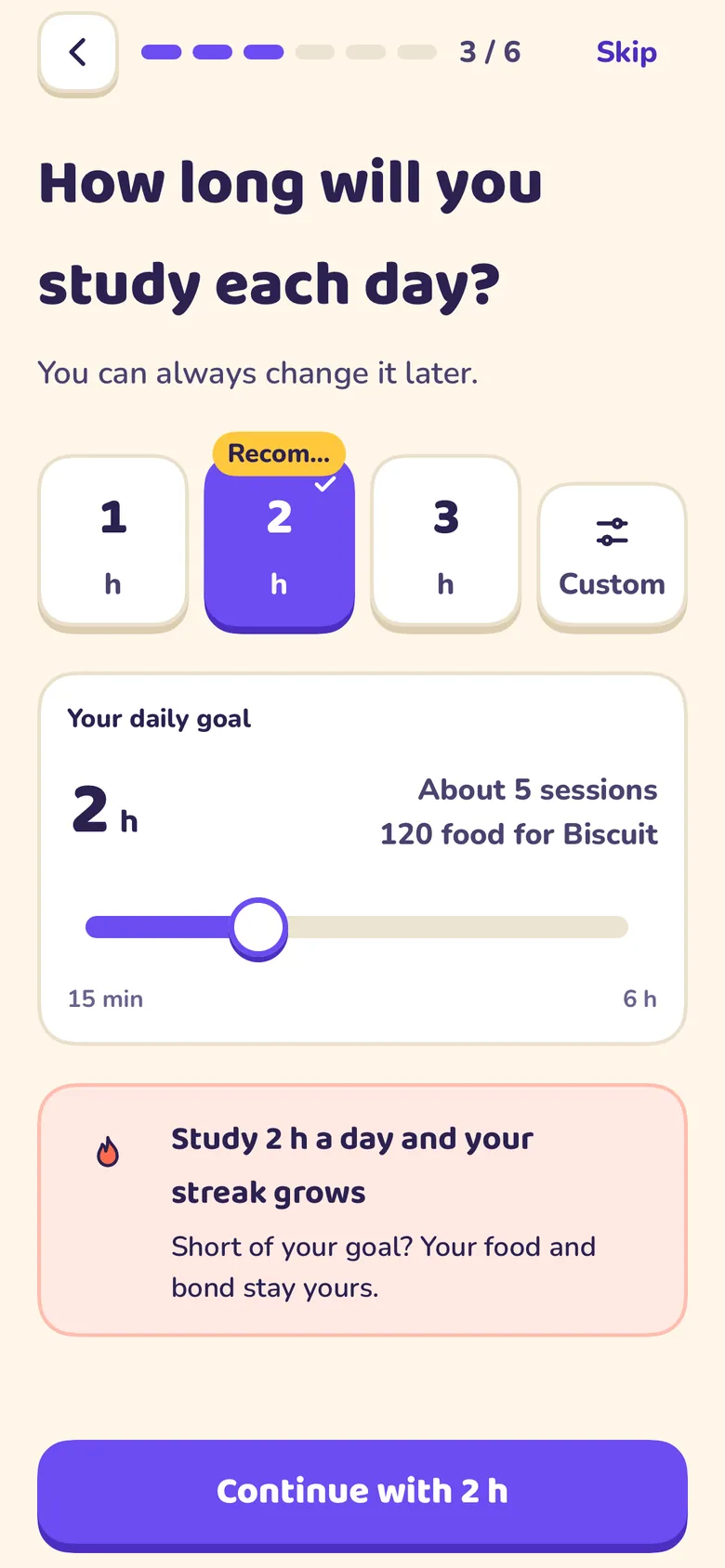
After your last paper, take a proper day off. For the years ahead, browse our planning guides.
Board exam preparation FAQ
When should I start preparing for board exams?
Really, from the start of the year, alongside your classes. Begin the full revision plan about 12 weeks before your first paper, and 3–4 weeks earlier for any subject you're very weak in.
How many hours a day should I study for the boards?
On school and tuition days, 2–4 focused hours of self-study; on holidays and during prep leave, 5–6 hours, in blocks. More than that usually turns into rereading.
Is NCERT enough for CBSE board exams?
NCERT is the foundation, and for most students finishing it and then practising sample papers and previous board papers is the most important part of preparation. Add another book only once NCERT is solid.
What is the second board exam for Class 10?
CBSE introduced two Class 10 board exams from 2026, and that year the second one was held in May. Eligible students from the main exam could use it to improve, and for regular students the better of the two counted. Check that year's CBSE circular for who can appear and in how many subjects.
Sources and further reading
- Central Board of Secondary Education: Press release on the Class X Second Board Examination results, 2026
- Central Board of Secondary Education: Previous Years' Question Papers
- Central Board of Secondary Education: Marking Scheme
- Central Board of Secondary Education: Scheme of Examinations and Pass Criteria (Examination Bye-laws)
- Dunlosky, J., Rawson, K. A., Marsh, E. J., Nathan, M. J., & Willingham, D. T. (2013). Improving students' learning with effective learning techniques: Promising directions from cognitive and educational psychology. Psychological Science in the Public Interest, 14(1), 4–58.
- Roediger, H. L., & Karpicke, J. D. (2006). Test-enhanced learning: Taking memory tests improves long-term retention. Psychological Science, 17(3), 249–255.
- Rohrer, D., & Taylor, K. (2007). The shuffling of mathematics problems improves learning. Instructional Science, 35(6), 481–498.
- Hirshkowitz, M., Whiton, K., Albert, S. M., et al. (2015). National Sleep Foundation's sleep time duration recommendations: Methodology and results summary. Sleep Health, 1(1), 40–43.

By the Study Buddy Cat team
We are the small team behind Study Buddy Cat, a study timer where every focused minute feeds a cat. We write about the study habits we build into the app, drawing on learning research and on what students tell us.
Keep reading
-
 Exam guides
How to Prepare for NEET-UG: Study Plan and Timetable
A NEET-UG plan that works with school and coaching: the 180-question pattern, NCERT-first strategy per subject, a weekly timetable and how to use mocks. -
 Exam guides
How to Prepare for JEE Main: Study Plan and Timetable
A JEE Main plan that fits school, coaching and boards: the 75-question pattern, both sessions, subject strategy for PCM, a weekly timetable and mock reviews. -
 Planning and exams
How to Make a Study Schedule You'll Actually Stick To
A six-step method for a weekly study schedule that fits your real life, with school-week and exam-season templates and a 15-minute review checklist.
Make your next study session count
Study Buddy Cat turns every verified minute of focus into food for your cat. No account or paywall to start, no ads, and when you take a break, your cat waits for you.