How to Study for O-Levels and the SEC: A Sec 3–4 Plan
A Sec 3–4 plan for the SEC, which replaces O-Levels from 2027: G3 paper formats, what changed, a weekly timetable, subject tips and how to use the TYS.

On this page
- The SEC at a glance: what replaced the O-Levels
- When to start: Sec 3 to the SEC
- A weekly timetable with school, CCA and tuition
- Subject strategy for Pure Sciences and Combined Science
- TYS, prelim papers and the error log
- The last 4 weeks and exam days
- Stress, sleep and rest days
- Where Study Buddy Cat fits
- O-Level and SEC FAQ
In short
- From 2027, the O-Level, N(A)-Level and N(T)-Level exams are combined into the Singapore-Cambridge Secondary Education Certificate (SEC); G3 subjects keep the O-Level grades from A1 to 9, and SEAB says overall standards don't change.
- English and Mother Tongue written papers move to September, with a single Mother Tongue sitting and no mid-year paper; the other written papers run from October, and results come out in January.
- Use Sec 3 for solid foundations and Sec 4 for timed papers; about 10–14 focused hours a week outside lessons in Sec 4 is realistic alongside CCA.
- Practise with the ten-year series and prelim papers, but check every topic against the 2027 G3 syllabus and review each paper with an error log the same day.
If you're in Sec 3 now, you won't sit the O-Levels: you'll sit the Singapore-Cambridge Secondary Education Certificate (SEC), which combines the O-Level, N(A)-Level and N(T)-Level exams from 2027. Subjects taken at G3 level are the old O-Level standard, with the same A1-to-9 grades, so the way to prepare hasn't changed: finish the syllabus, practise timed papers, and learn from every mistake. Your results decide your aggregate for junior college, polytechnic or ITE.
Start properly in Sec 3 with the foundations that Sec 4 builds on (A Math algebra, the mole concept in Chemistry, essay and comprehension skills), and move to timed papers in Sec 4. With school, CCA and maybe tuition, a realistic load is about 6–8 focused hours a week outside lessons in Sec 3 and 10–14 in Sec 4: 1.5–2 hours on most weekdays plus one longer weekend session. The one big timing change: English and Mother Tongue written papers move to September.
The SEC at a glance: what replaced the O-Levels
The SEC is examined jointly by SEAB, MOE and Cambridge International Education, in line with Full Subject-Based Banding. You take each subject at G1, G2 or G3 level, and every level keeps the grades of the exam it replaces:
| Level | Replaces | Grades |
|---|---|---|
| G3 | O-Level | A1, A2, B3, B4, C5, C6, D7, E8, 9 |
| G2 | N(A)-Level | 1 to 6 |
| G1 | N(T)-Level | A to E |
You get one certificate listing all your subjects and levels. For G3, a subject appears on the certificate with E8 or better.
The timetable (SEC from 2027):
- Before the written papers: science practicals, oral exams and listening comprehension, as before.
- September: English and Mother Tongue written papers. There is only one Mother Tongue written sitting a year, including Higher Mother Tongue, and no mid-year sitting.
- October to November: all other written papers, in one common period.
- January: one common results release.
The Mother Tongue change matters most: there's no mid-year paper to "clear" it early and no second written attempt later in the year, so plan for Mother Tongue to peak in September.
G3 papers in the 2027 syllabuses
| Subject | Papers | Worth knowing |
|---|---|---|
| English (K300) | Paper 1 Writing: editing, situational and continuous writing (1 h 50 min, 35%). Paper 2 Comprehension (1 h 50 min, 35%). Paper 3 Listening (about 45 min, 10%). Paper 4 Oral: Planned Response and Spoken Interaction (about 20 min including 10 min preparation, 20%) | Oral and listening are 30% of the grade |
| Mathematics (K310) | Paper 1: about 26 short questions (2 h 15 min, 90 marks). Paper 2: 9–10 longer questions (2 h 15 min, 90 marks) | Approved calculator in both papers; Paper 2 ends with a real-world application question |
| Additional Mathematics (K341) | Paper 1: 12–14 questions. Paper 2: 9–11 questions. Each 2 h 15 min, 90 marks | Algebra, geometry and trigonometry, calculus |
| Physics (K323), Chemistry (K324) | Paper 1: 40 multiple-choice questions (1 h, 30%). Paper 2: structured and free response, 80 marks (1 h 45 min, 50%). Paper 3: practical (1 h 50 min, 20%) | Paper 2 has a data-based question and a choice of one from two in Section B |
| Science (Physics, Chemistry) (K326) | Paper 1: 40 multiple-choice questions (20%). Physics and Chemistry structured papers, 65 marks each (1 h 15 min, 32.5% each). Practical test (1 h 30 min, 15%) | Pure Sciences students take the separate sciences instead |
| Humanities (Social Studies, Geography) (K335) | Paper 1 Social Studies: source-based case study and structured-response questions (1 h 45 min, 50%). Paper 2 Geography (1 h 45 min, 50%) | Other pairings combine Social Studies with History or a Literature |
History (K330) is an e-Examination subject, and Principles of Accounts (K342) has refined content; their syllabuses are on SEAB's page, each listed with the O-Level code it replaces.
What your results open after Sec 4
Admission uses aggregates, where lower is better (A1 counts as 1). SEAB's SEC page names ELR2B2 (English plus your best relevant and other subjects) for polytechnic courses and ELMAB3 for Year 2 of Higher Nitec and the Polytechnic Foundation Programme; when you mix levels, G3 grades are mapped to G2 only for the aggregate. Junior colleges have used the L1R5 aggregate for O-Level cohorts, and the rules are being updated for the SEC, so check MOE's current Joint Admissions Exercise information for your intake year.
When to start: Sec 3 to the SEC
| Phase | When | What it looks like |
|---|---|---|
| Foundations | Sec 3 | Keep up with every new topic the week it's taught; topical practice after each chapter; a formula and definitions sheet per subject written from memory |
| Close the syllabus | Sec 4, Term 1 | New topics plus one block a week on an old Sec 3 chapter; topical past-paper questions; English and Mother Tongue oral practice starts |
| Timed practice | Sec 4, Term 2 and June holidays | Timed sections, then full papers; one paper per subject every two weeks; error log for every subject |
| Prelims | Sec 4, Term 3 | School prelims; orals, listening and practicals as SEAB schedules them; weekly full papers for your weakest subjects |
| Written papers | September, then October to November | English and Mother Tongue first; then plan the rest of the season paper by paper |
Coming from a weak Sec 3? List the topics that cost you the most marks in your end-of-year papers and fix two a week through Term 1 of Sec 4, starting with the earliest gap, since A Math and Chemistry topics build on each other.
A weekly timetable with school, CCA and tuition
A Sec 4 weekday usually means school until early afternoon, CCA on some days and maybe tuition, so protect a few fixed blocks. Here's an example for a day without CCA; shift the times to your school's hours:
| Time | What to do |
|---|---|
| 7:30–2:00 | School |
| 2:00–3:30 | Lunch, rest, travel home |
| 3:30–4:20 | Block 1: today's hardest homework or topical practice (E Math or A Math works well here) |
| 4:30–5:20 | Block 2: a science or humanities topic, closed-book recall first, then check |
| 5:20–7:30 | Exercise, free time, dinner |
| 7:30–8:20 | Block 3: English or Mother Tongue (comprehension, writing plan or oral practice) |
| 8:20–8:40 | Error log and tomorrow's first task |
| 10:00 | Phone away, lights out |
On CCA or tuition days, do just one block, ideally your weakest subject. A week then looks like this:
| Day | Main focus |
|---|---|
| Mon, Wed | Maths and one science |
| Tue, Thu (CCA) | One block: weakest subject |
| Friday | Humanities or Principles of Accounts, plus the error log |
| Saturday | One timed paper (or two timed sections) and its review |
| Sunday | Morning: English writing or Mother Tongue; afternoon and evening off |
During the June holidays, aim for 4–6 focused hours on weekdays in blocks of about 50 minutes, with one full paper every two or three days and at least one day a week completely off. Beyond that, extra hours usually turn into rereading; see how many hours to study a day.
Subject strategy for Pure Sciences and Combined Science
English (both combinations)
- Writing (35%). Editing rewards a daily set of ten lines. For situational writing, identify purpose, audience and context before you write, and cover every point in the task. For continuous writing, keep a bank of planned essays by theme and practise writing an outline in eight minutes.
- Comprehension (35%). Answer in your own words where the question asks for it, and quote precisely where it asks for evidence.
- Oral (20%) and listening (10%). The oral has a planned response after preparation time, followed by a spoken interaction. Record yourself once a week and listen back.
- Where marks go: situational writing that misses the audience, essays that drift from the question, and copying long chunks in comprehension.
Mother Tongue
With one written sitting in September and orals before it, Mother Tongue needs a steady weekly slot from Sec 3, not a burst in Term 3. Read and summarise one article a week, keep a vocabulary and phrase list for writing, and practise speaking on current topics.
E Math and A Math
- E Math: Paper 1's short questions punish slips; Paper 2's last question applies maths to a real-world scenario, so practise reading long contexts and pulling out the numbers that matter.
- A Math: algebra is the foundation for everything else, from quadratics and logarithms to calculus. Practise "show that" questions until every step is written.
- Mix chapters in practice. In a 2007 study by Doug Rohrer and Kelli Taylor, students who practised maths problems in shuffled order did worse during practice but clearly better a week later than those who practised one type at a time. Your papers mix topics, so your practice should too.
- Where marks go: rounding too early, missing units, unsupported geometry reasons, and algebra slips in long A Math questions.
Physics and Chemistry (Pure Sciences)
- Paper 1 (40 multiple-choice questions in an hour) rewards precise definitions and quick reasoning; do a timed set weekly.
- Paper 2 has a data-based question and a choice in Section B; practise answering with keywords linked into a full explanation.
- Paper 3 (practical, 20%) includes planning: practise writing a method with variables, controls and how you'd record results. In Chemistry, a copy of the Notes for Qualitative Analysis is printed in the paper, so learn to use it rather than memorise it.
- Where marks go: explanations that state a fact but skip the link to the question, unit and significant-figure errors, and mole-concept slips.
Combined Science
Combined Science (Physics, Chemistry) has a shared multiple-choice paper, then separate Physics and Chemistry papers worth 32.5% each, and a practical test. Treat it as two half-subjects: give each its own weekly block so one doesn't quietly fall behind.
Social Studies, Geography, History and POA
- Social Studies source-based questions are marked by levels: identify the source's message, use evidence, and evaluate. Practise one source-based case study a week from Term 1 of Sec 4.
- Geography questions are point-marked, except one longer question marked by levels; learn case studies with specific examples.
- History: it's an e-Examination subject, so practise typing timed answers.
- POA: practise full questions by hand, and learn formats until they're automatic.
TYS, prelim papers and the error log
SEAB names the authorised sellers of past GCE-Level papers: Singapore Asia Publishers, Shing Lee Publishers and Educational Publishing House, whose past-paper books, often called the ten-year series (TYS), are what most students practise with. Since SEAB lists each 2027 G3 syllabus with the O-Level code it replaces, O-Level TYS papers stay useful; just skip any topic that's no longer in the current syllabus. Prelim papers from other schools make good extra practice.
Practice papers beat rereading. In a 2013 review of ten common study techniques, John Dunlosky and colleagues rated practice testing and spreading practice over time as the most useful, and rereading and highlighting low. More on the method in our guide to active recall and spaced repetition.
Review each paper on the same day, and log every mistake:
| Reason | Example | Fix |
|---|---|---|
| Concept gap | Didn't know how to start a moments question | Relearn from notes, then 5 TYS questions on it |
| Careless slip | Lost a minus sign in A Math | Write every line; check signs at the end of each question |
| Didn't answer the question | Described a trend when the question asked for an explanation | Underline the command word in every question |
| Time | Rushed the last Social Studies question | Practise with a time budget per question |
The last 4 weeks and exam days
Orals, listening and practicals come before the written papers. Count backwards from each paper, not from the first one:
- Four to two weeks before a paper: two or three timed papers for it, each reviewed the same day; everything else from the error log.
- The final week before a paper: one last paper early in the week, then light review of formulas, definitions and your error log.
- Long exam season: keep every later subject warm with one short block a week until its paper.
- Logistics: an approved calculator, geometrical instruments for Maths, the identification your school tells you to bring, and your timetable checked against SEAB's official one.
On exam day:
- Eat breakfast and arrive early, with everything packed the night before.
- Spend five minutes on your one-page summary, then put it away.
- Read every question's command word (state, explain, compare, show that).
- Use your two-pass system and keep an eye on the clock.
- Don't discuss answers afterwards; the next paper is what you can still change.
Stress, sleep and rest days
Sec 4 brings plenty of comparison: prelim rankings, tuition centre talk, relatives asking about your aggregate. A prelim result tells you what to fix; it isn't a prediction.
Sleep is part of the plan. A National Sleep Foundation expert panel recommends 8–10 hours a night for teens aged 14–17 (Hirshkowitz and colleagues, 2015); more in our guide to sleep and studying. Keep one lighter day each week, even in Term 3.
If stress has affected your sleep, appetite or mood for weeks, or you're having panic attacks, talk to a parent, your form teacher, the school counsellor or a doctor. If you ever have thoughts of harming yourself, tell someone you trust straight away. For everyday coping, read how to deal with exam stress.
Where Study Buddy Cat fits
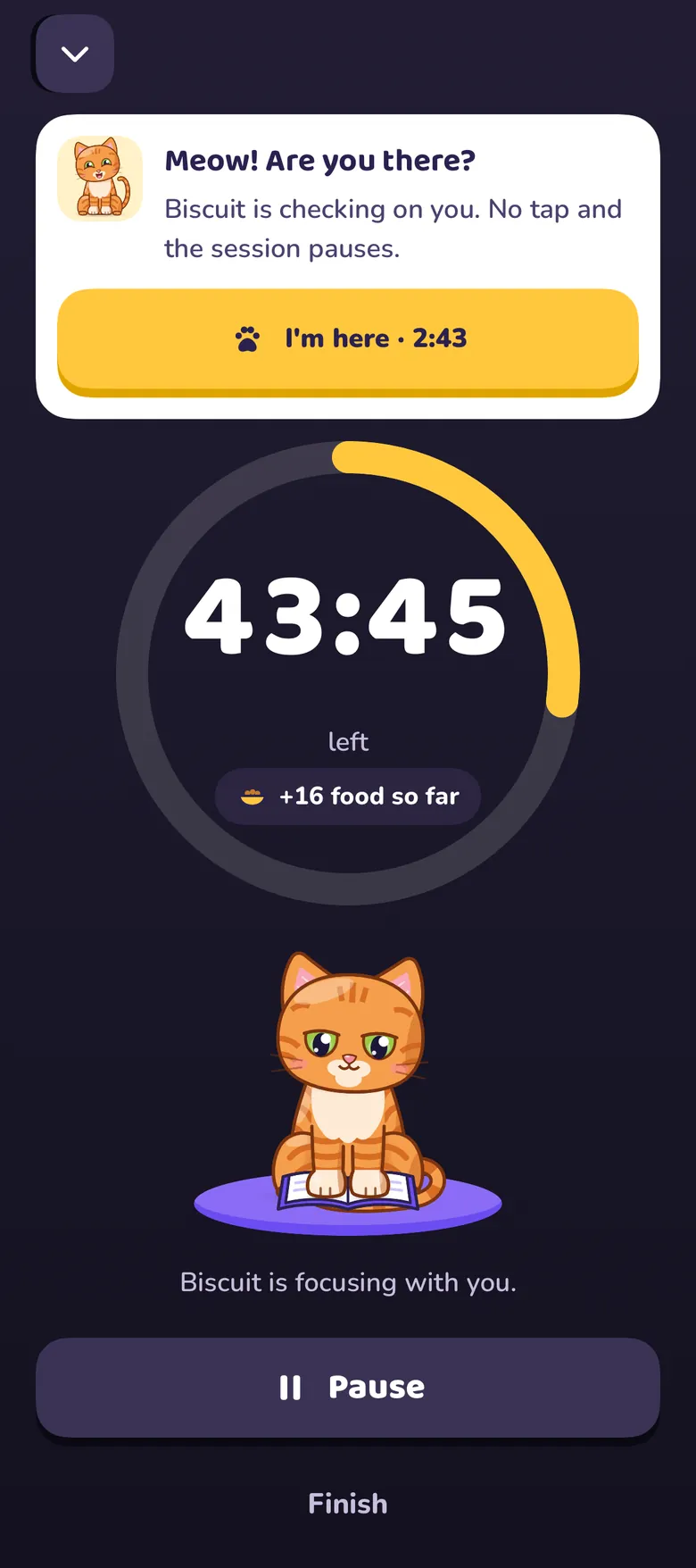
Each Sunday, compare where your focused minutes went with where you're losing marks: if Chemistry keeps costing you but gets the fewest minutes, it goes first next week.
Thinking about JC? Our A-Level study plan for Singapore shows what JC1 and JC2 look like.
O-Level and SEC FAQ
Is the SEC harder than the O-Levels?
SEAB says there is no change in overall standards. G3 subjects are the O-Level standard and keep the same grades from A1 to 9; the main changes are the combined certificate, the levels and the exam timetable.
How many hours a day should I study for the SEC in Sec 4?
About 1.5–2 focused hours on school days (one block on CCA days), a longer weekend session with a timed paper, and 4–6 hours on weekdays in the June holidays.
Are O-Level TYS papers still useful for the SEC?
Yes, for G3 subjects. SEAB lists each 2027 G3 syllabus with the O-Level syllabus it replaces. Check each topic against the current syllabus and skip anything that's no longer examined.
Is there still a mid-year Mother Tongue exam?
Not under the SEC. There is one Mother Tongue written sitting a year, in September, with orals and listening before it.
When do SEC results come out?
In January of the following year, in one common release for all levels.
Sources and further reading
- Singapore Examinations and Assessment Board: Singapore-Cambridge Secondary Education Certificate (SEC)
- Singapore Examinations and Assessment Board: 2027 SEC G3 Syllabuses for School Candidates
- Singapore Examinations and Assessment Board: Important Dates for Candidates
- Singapore Examinations and Assessment Board: Distributors of Past Years' Question Papers
- Dunlosky, J., Rawson, K. A., Marsh, E. J., Nathan, M. J., & Willingham, D. T. (2013). Improving students' learning with effective learning techniques: Promising directions from cognitive and educational psychology. Psychological Science in the Public Interest, 14(1), 4–58.
- Rohrer, D., & Taylor, K. (2007). The shuffling of mathematics problems improves learning. Instructional Science, 35(6), 481–498.
- Hirshkowitz, M., Whiton, K., Albert, S. M., et al. (2015). National Sleep Foundation's sleep time duration recommendations: Methodology and results summary. Sleep Health, 1(1), 40–43.

By the Study Buddy Cat team
We are the small team behind Study Buddy Cat, a study timer where every focused minute feeds a cat. We write about the study habits we build into the app, drawing on learning research and on what students tell us.
Keep reading
-
 Exam guides
How to Prepare for PSLE: A Calm Study Plan for P6
A calm PSLE plan for P5 and P6: the 2026 paper formats, how AL scoring works, a weekly timetable that leaves room to play, and how parents can help. -
 Exam guides
How to Study for A-Levels in Singapore: A JC1–JC2 Plan
A JC1–JC2 plan for the Singapore-Cambridge A-Levels: GP and H2 paper formats, how the UAS works now, a weekly timetable, and how to use the TYS and prelims. -
 Planning and exams
How to Make a Study Schedule You'll Actually Stick To
A six-step method for a weekly study schedule that fits your real life, with school-week and exam-season templates and a 15-minute review checklist.
Make your next study session count
Study Buddy Cat turns every verified minute of focus into food for your cat. No account or paywall to start, no ads, and when you take a break, your cat waits for you.